
Guidelines for Writing Your Artwork's Medium

Updated: Nov 28, 2025
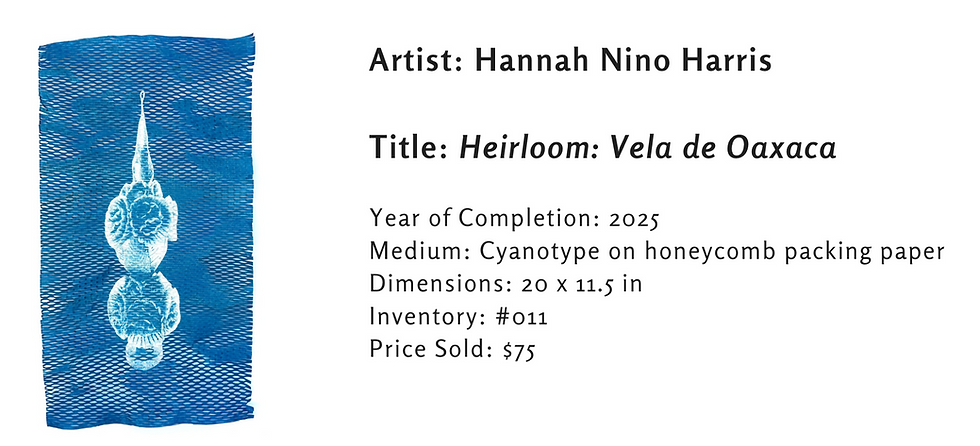
How to Write Artwork Mediums When Submitting to a Gallery
Have you struggled with writing the medium for your artwork when submitting to a gallery or posting online? This guide will support you in writing clear, consistent, and concise medium descriptions for your submissions.
Writing a Simple Medium for 2D and 3D Work
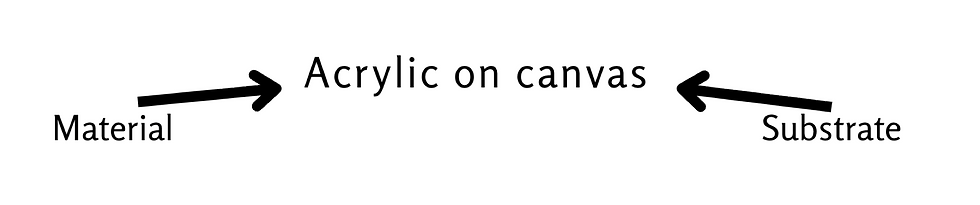
When listing the medium for a gallery submission, use short, clear, and concise language. A medium description typically includes material + substrate.
Substrate: the surface or base you paint, draw, sew, or attach materials onto (e.g., canvas, wood panel, paper).
Material: what you apply to the substrate (e.g., acrylic paint, oil paint, charcoal, fabric, found objects).
For example, if you used acrylic paint on canvas, you would write:
Other examples:
Oil on linen
Charcoal on paper
Found objects on wood
Mixed Media on textile
Silk on archival foam
Listing Materials for Sculpture
For sculptures with only a few materials, list the material that makes up the majority of the piece first, followed by the secondary materials.
Examples:
Wool and cotton
Steel and copper
Silk and cardboard
Using “On” vs. “And”
Use “and” when the materials interact with each other as equal components.
Use “on” when one material is applied to or supported by another.
Examples
A sculpture made of intertwined steel and copper → “Steel and copper”
A canvas onto which fabric is sewn → “Fabric on canvas”
Writing Mediums for Mixed Media (and When to List Materials)
Struggling to choose between “Mixed Media” and listing specific materials?Here are the guidelines:
If the materials are relevant to your artist statement, concept, or exhibition theme, list the key materials.
If the specific materials don’t matter conceptually, “Mixed media” is perfectly acceptable.
Only list 2–3 primary materials so the list does not become overly long.
Example 1: Conceptually Relevant Materials
If your work centers on recycled or found materials, be specific:
“Found traffic cones, recycled aluminum, and other found objects”
“Recycled newspaper and reused single-use plastic on canvas”
❌ Avoid long, exhaustive lists such as:“Found traffic cones, recycled aluminum, found jewelry, firewood, reed, collected Styrofoam containers…”
Example 2: When the Exhibition Theme Requires Detail
If the show has a specific focus, such a a focus on paper, list the type of paper:
“Graphite on rice paper”
“Acrylic and colored pencil on Yupo paper”
Mediums for Functional and Sculptural Ceramics
When submitting ceramic work, avoid listing only general terms like “Ceramic,” “Bowl,” or “Clay.” These do not provide enough information for galleries or viewers.
Instead, describe the materials, surface treatments, and—when relevant—firing methods.
Basic Examples
Glaze and slip on earthenware
Glaze on porcelain
Glazed stoneware
Earthenware
For ceramic-focused exhibitions, you may want to include glaze type, clay body, or firing method.
Advanced Examples
“Celadon on Cone 10 Porcelain”
“Oxide wash on Slab built earthenware”
“Soda fired porcelain"
“Luster glaze on raku claybody, raku fired”
"Cone 8 Reduction Fired Tenmoku on Stoneware"

Comments